Player Demographics Reshaping Loyalty Pathways in On-Demand Reel and Dealer Formats
Harper Berger · Jul 18, 2026

Player Demographics Reshaping Loyalty Pathways in On-Demand Reel and Dealer Formats
Player demographics in digital gambling continue to evolve, and these changes directly influence how operators structure loyalty pathways for on-demand reel games and live dealer sessions. Data collected through 2026 reveals clear patterns in age distribution, device preferences, and session behaviors that operators track when designing tiered rewards. As of July 2026, industry reports indicate that mobile users aged 25 to 34 now represent the largest segment accessing both reel spins and real-time table streams within single apps.
Age-Based Shifts Drive Program Adjustments
Younger cohorts favor quick reel sessions interspersed with live dealer drops, while older groups maintain longer table engagements that accumulate points differently. Studies compiled by the American Gaming Association show that users under 30 complete loyalty milestones through frequent small deposits and rapid game switches, whereas players over 45 reach equivalent tiers via extended table play. These behaviors prompt operators to recalibrate reward triggers so that both reel volume and dealer session length contribute equally to tier progression across mobile platforms.
Operators now monitor real-time demographic data to adjust bonus structures, ensuring that on-demand access aligns with observed play patterns rather than fixed schedules. Research from academic sources such as the University of Nevada, Las Vegas gaming studies highlights how 18-to-24-year-olds prioritize instant reward notifications tied to reel outcomes, while 35-to-44-year-olds respond more consistently to cumulative live dealer milestones that unlock personalized table limits.
Gender and Geographic Patterns Shape Engagement
Gender distribution data reveals distinct preferences that affect loyalty pathway design. Female players demonstrate higher retention rates when loyalty points convert directly into live dealer seat reservations, whereas male players accumulate reel-based multipliers at faster rates. Geographic variations add further complexity; North American users show stronger adoption of hybrid reel-to-dealer transitions, while European markets record steadier growth in dedicated live formats.
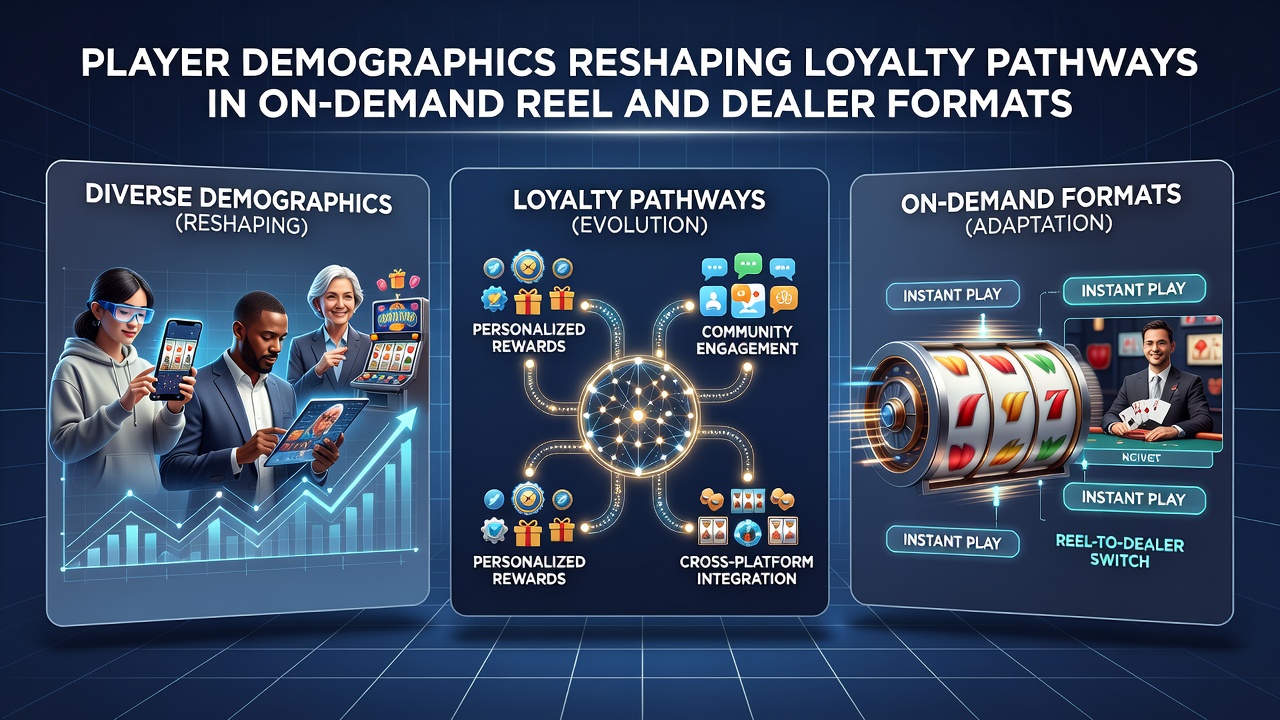
Canadian provincial data tracked through iGaming Ontario demonstrates that regional payment preferences further segment loyalty uptake, with e-wallet users advancing through tiers more rapidly than those relying on traditional banking. These patterns encourage operators to embed flexible conversion rules that recognize both demographic clusters and transaction methods when awarding status benefits.
Reel and Dealer Format Integration in Loyalty Structures
Loyalty programs increasingly treat reel spins and dealer-hosted tables as interconnected rather than separate verticals. Transaction velocity data indicates that players who alternate between formats reach higher tiers sooner than single-format users. This integration requires systems that log both spin volume and table duration within unified profiles, allowing seamless progression regardless of game type selected on mobile devices.
Operators update pathways to include cross-format challenges that reward transitions between reel sessions and live tables. Figures released by regulatory bodies such as the New Jersey Division of Gaming Enforcement confirm rising participation in these blended programs, particularly among users who began with reel play and later expanded into dealer formats. The result appears in revised point multipliers that scale based on total engagement across both categories rather than isolated metrics.
Device and Session Trends Affecting Reward Access
Mobile-only players exhibit shorter but more frequent sessions, prompting loyalty systems to award incremental progress for each completed reel or dealer round. Desktop users, by contrast, often sustain longer dealer sessions that trigger larger status jumps. Observers note that these device-driven differences lead operators to offer parallel pathways: one optimized for rapid mobile reel activity and another calibrated for sustained table participation.
Demographic data collected through mid-2026 shows continued growth in cross-device loyalty accounts, where players start sessions on phones and finish on tablets. Programs now accommodate these switches by preserving progress across formats, ensuring that reel achievements and dealer time both contribute to the same tier thresholds without requiring separate enrollment steps.
Conclusion
Demographic trends continue to inform how loyalty pathways evolve for on-demand reel and dealer formats. Operators rely on age, gender, geographic, and device-specific data to maintain balanced reward systems that recognize varied play styles. As player bases diversify, these data-driven adjustments ensure that both reel and live dealer engagement receive equivalent recognition within unified mobile loyalty frameworks.